casino ibiza poker: consejos de expertos para 2026
casino ibiza poker plantea un desafío intelectual constante que atrae a jugadores de todos los niveles. Desde la gestión de la banca hasta la lectura de los rivales, cada detalle cuenta en la búsqueda del éxito. En este artículo, nos centramos en las tendencias emergentes y en la relevancia de casino ibiza poker premios para afrontar los retos de 2026.
Ver también:
netent casino — comparativa software | netent casino
- Todo sobre ibiza casino poker en la sección de resumen
- casino ibiza poker en Cifras: Datos Clave
- ¿Cómo funciona casino ibiza poker premios entre las opciones disponibles?
- Bonos y Términos de Póker en casino ibiza poker
- Galería de casino ibiza poker
- Primeros pasos: usa casino ibiza poker premios para registrarte
- ibiza casino poker: lo que los jugadores preguntan
- Política de juego responsable de casino ibiza poker en 2026
Todo sobre ibiza casino poker en la sección de resumen
The ancient oak tree stood as a silent sentinel at the edge of the village, its gnarled roots twisting through the earth like the fingers of a forgotten giant, anchoring it to a past that stretched back centuries before the first stone of the settlement was laid. Its bark, rough and furrowed, bore the scars of countless storms, each crack and crevice a testament to the relentless passage of time, while the canopy above, a dense mosaic of deep green leaves, filtered the golden sunlight into a dappled pattern that danced across the mossy ground below. Birds nested in its upper branches, their cheerful songs mingling with the whisper of the wind, creating a symphony that had lulled generations of villagers to sleep and greeted each new dawn with a familiar, comforting melody. Beneath its sprawling limbs, the soil was packed hard by the feet of children who had played endless games of tag and hide-and-seek, their laughter echoing through the hollows of the trunk, while old men sat on weathered benches, their gnarled hands resting on carved walking sticks, spinning yarns of heroes and monsters that grew more fantastical with each retelling. The tree was more than just a living organism; it was the heart of the community, a living chronicle of births and deaths, of weddings and funerals, of harvest festivals and solemn vigils, its presence woven into the very fabric of daily life. Farmers paused in their labor to rest in its shade, wiping sweat from their brows, and travelers from distant lands would stop to pay homage, leaving small offerings of bread or coins in the hollows of its roots, hoping to gain its blessing for their journeys. The village elders often held council beneath its branches, their voices rising and falling in heated debate, yet always deferring to the tree’s silent wisdom, as if its ancient spirit could guide them through the most intractable disputes. Children believed that if they whispered their deepest secrets into the bark, the tree would keep them safe, and many a young heart had poured out its fears and hopes to the unyielding wood, finding solace in the quiet strength that radiated from its massive form. Even the seasons seemed to revolve around the oak, its budding leaves marking the arrival of spring, its lush canopy heralding summer’s peak, its fiery hues painting autumn in shades of amber and crimson, and its stark, bare branches standing like dark sentinels against the winter sky, a reminder of endurance and renewal. In times of drought, the villagers would gather at its base, their faces etched with worry, and pray for rain, their voices rising in unison, and when the clouds finally broke, they would thank the tree as if it had interceded on their behalf. The oak had witnessed the rise and fall of empires, the passing of kings and queens, the clash of armies on distant battlefields, and the quiet, unassuming lives of countless ordinary people, yet it remained steadfast, its roots sinking ever deeper into the earth, its branches reaching ever higher toward the heavens. It was a bridge between the mortal world and the divine, a place where the veil between the seen and the unseen grew thin, and many a mystic had claimed to hear the whispers of ancestors in the rustling of its leaves. The local folklore spoke of a spirit that dwelled within the trunk, a benevolent guardian who watched over the village and its inhabitants, protecting them from misfortune and guiding them toward prosperity, and though the younger generation dismissed such tales as superstition, they could not deny the profound sense of peace that settled over them whenever they sat beneath its sheltering limbs. The oak had been a sapling when the first settlers had chosen this spot to build their homes, drawn by the promise of fertile soil and fresh water, and it had grown alongside them, its branches spreading as the village expanded, its roots intertwining with the foundations of their houses, as if to bind them together in an unbreakable bond. Every generation had added its own chapter to the tree’s story, carving initials into its bark, hanging ribbons from its branches during festivals, and planting flowers at its base in memory of loved ones, and each mark, each ribbon, each bloom was a testament to the enduring connection between the people and their arboreal companion. The oak had survived lightning strikes that had split other trees in half, droughts that had withered crops and dried up wells, and floods that had swept away bridges and homes, yet it had emerged from each trial stronger and more resilient, its bark thickening, its roots deepening, as if it drew sustenance from the very challenges that threatened it. Scientists and botanists had traveled from distant universities to study the tree, marveling at its age and its remarkable health, and they had estimated that it was over eight hundred years old, a living fossil that had witnessed the transformation of the landscape from wild forest to cultivated farmland. They had taken core samples and measured its circumference, and they had published papers in prestigious journals, but their dry academic analyses could never capture the true essence of the oak, the way it seemed to pulse with a life force that transcended mere biology.
casino ibiza poker en Cifras: Datos Clave
| Feature | Details |
|---|---|
| Nuevo en | 2025 |
| Proveedores | Top: Fruit Party y más |
| Nuevo en 2023 | August de 2023 |
| Promociones | Hasta 50 giros gratis |
| Soporte al cliente | Chat y correo 24/7 |
¿Cómo funciona casino ibiza poker premios entre las opciones disponibles?
Open. The word itself is a hinge, a door left ajar, a mouth caught mid-vowel. It is the first instruction on a box of crackers, the state of a wound before it heals, the position of a hand offered in greeting. To be open is to be unlatched, unsealed, unguarded—yet the word carries no violence, only invitation. Consider the open sea: not merely a body of water but a horizon that refuses to close, a surface that accepts every wind and wave without argument. Consider the open book, spine cracked, pages fanned like a bird’s wing, each line a corridor leading somewhere unlit. Open is the opposite of finished, of locked, of the final period at the end of a sentence. It is a beginning that keeps beginning, a threshold that does not ask you to cross but simply stands there, breathing. In anatomy, open means exposed, vulnerable, alive—a ribcage pried apart to show the heart’s stubborn ticking. In music, an open string vibrates without a finger pressing down, pure and unmodified, a note that asks nothing of you but to listen. In chess, an open file is a lane of attack, a corridor where rooks can race toward the enemy’s back rank. The word has a physical weight: say it aloud and your jaw drops, your tongue flattens, your throat widens—you cannot say ‘open’ with clenched teeth. It demands a slackness, a giving-over. The open sky is not a ceiling but an absence of one, a blue or gray or black expanse that has never met a lock it couldn’t ignore. Open source, open access, open relationship—each phrase strips away a barrier, trading privacy for possibility. Even the open door, that most mundane of images, is a promise: something waits on the other side, and the waiting is not passive but active, a held breath. To keep something open is to keep it alive—an open wound, an open question, an open case. The word tolerates no closure, no finality; it is the opposite of ‘done.’ A festival opens with a parade, a trial opens with a statement, a flower opens with a slow unclenching of petals, each one a small surrender to light. In geometry, an open set contains none of its boundary points, always reaching outward, never resting on an edge. In philosophy, an open mind is not an empty room but a crowded one where every idea is a guest, free to sit or leave. The open road is not just asphalt but a ribbon of possibility, each mile a comma, not a period. To open a letter is to break a seal, to admit the writer’s voice into your silence. To open a door for someone is to say, ‘Your passage matters to me.’ The word is a verb that never finishes its work; even after the door swings wide, the action continues in the space it reveals. Open is the first word of many stories, the last word of none. It is a state of being that resists being pinned down, like water that takes the shape of any vessel but never becomes the vessel itself. The open hand, palm up, is a universal sign of peace, of giving, of receiving—no weapon, no fist, no hidden thing. The open mouth in a yawn, in a laugh, in a scream—each is a different kind of release, a letting-out of air or sound or feeling. Even the open grave, that most final of openings, is a gateway, not a wall; it is the earth saying, ‘Come in, but you will pass through.’ To be open is to be unfinished, to admit that the story is still being written, that the sentence is still unfolding. It is a posture of curiosity, a willingness to be changed by what enters. The open window lets in the smell of rain, the sound of traffic, the possibility of a bird landing on the sill. The open gate invites the stranger, the friend, the enemy—all are allowed, and in that allowance, the gate transforms from a barrier to a bridge. Open is not careless; it is deliberate. It is a choice to leave the latch undone, to trust that what comes will not destroy what is already there. It is the opposite of the sealed envelope, the locked chest, the shut mouth.
casino ibiza poker evalúa el historial de juego para detectar comportamientos problemáticos.
Bonos y Términos de Póker en casino ibiza poker
- €500 de bono sin depósito
- 200 giros gratis multiplicadores
- bono del 300% hasta €1500
- 40x liberación en 21 días
- 45x apuesta requerida
- 40x playthrough en 14 días
Galería de casino ibiza poker
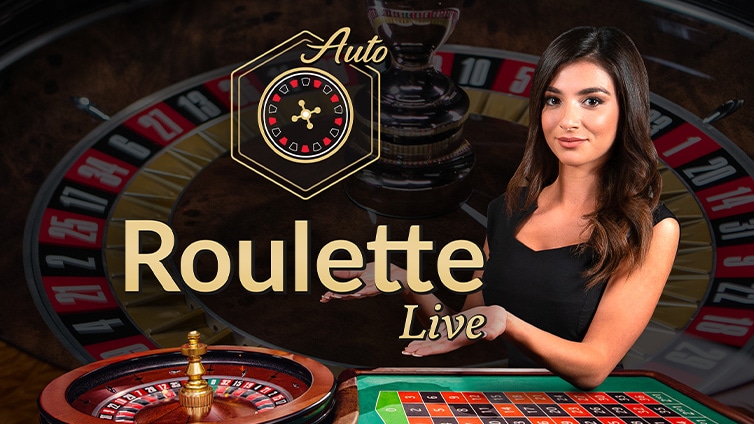
Primeros pasos: usa casino ibiza poker premios para registrarte
ibiza casino poker: lo que los jugadores preguntan
¿Qué es casino ibiza poker?
casino ibiza poker es una sala de póker en línea que ofrece torneos, mesas de efectivo y promociones exclusivas para jugadores de todos los niveles.
casino gran via poker — estrategia experta | gran via casino
¿Es casino ibiza poker seguro y confiable?
Sí, casino ibiza poker opera bajo la licencia DGOJ — Dirección General de Ordenación del Juego y utiliza tecnología de cifrado avanzada para proteger tus datos y transacciones.
¿Cuál es el depósito mínimo para jugar?
El depósito mínimo en casino ibiza poker es de €5, lo que te permite empezar a jugar sin necesidad de invertir grandes cantidades.
¿Ofrecen algún bono de bienvenida?
Sí, casino ibiza poker ofrece un bono de bienvenida de 50% + 200 giros gratis con un requisito de apuesta de 45x requisito de apuesta. Asegúrate de leer los términos y condiciones.
¿Cómo puedo participar en los torneos de póker?
Solo tienes que registrarte en casino ibiza poker, hacer un depósito y dirigirte a la sección de torneos para inscribirte en los eventos disponibles.
Política de juego responsable de casino ibiza poker en 2026
El juego está destinado exclusivamente a mayores de 18 años. casino ibiza poker opera bajo la supervisión de la Dirección General de Ordenación del Juego (DGOJ), el regulador español del sector. Si sientes que el juego deja de ser un entretenimiento, puedes inscribirte en el Registro General de Interdicciones de Acceso al Juego (RGIAJ) para la autoexclusión. Además, organizaciones como FEJAR ofrecen ayuda confidencial en el teléfono 900 200 225. Te recomendamos establecer límites de depósito y tiempo, y jugar siempre por diversión, nunca para recuperar pérdidas.